
Paris With Children in Spring: Parks First


Paris has more than 560 children’s play areas in its gardens, so a family trip does not need to revolve around queues and famous paintings. After years of planning city days around tired legs, I have learned one rule: give children outdoor space before asking them to behave indoors. Spring makes that strategy work beautifully. Build each day around one park, one small treat, and one manageable museum visit. That rhythm gives adults enough Paris to enjoy while children still have room to run.
Plan each day around energy, not landmarks
My strongest advice for Paris with children in spring is simple: stop planning by arrondissement and start planning by energy level. A map may tell you that three attractions are close together. It does not tell you that a hungry five-year-old will reject a ten-minute walk after climbing stairs, crossing traffic, and waiting for a lift.
Set a hard daily radius
Choose one main neighbourhood for the morning and keep the walking radius below 1.5 kilometres. That is enough for a park, lunch, and one indoor stop without turning the day into a march. Add one optional sight only if everyone is still cheerful after lunch. My family rule is two planned activities and one unplanned pause. The pause might be a bakery, a bench, or twenty minutes watching boats. It is not wasted time; it keeps the rest of the day usable.
Use the 90-minute reset
Children often need a change of setting before they need another attraction. After roughly 90 minutes of walking, sightseeing, or museum time, stop for water and food. In cool spring weather, pack a light layer even when the afternoon forecast looks warm. Paris streets create wind tunnels, and stone courtyards stay cold. Put snacks in an outer pocket, carry wipes, and keep one dry pair of socks in the day bag. Those small details prevent the kind of discomfort that makes every later decision harder.
Verdict: For a family trip, three relaxed hours in one district beat six rushed hours across Paris. The children will remember the city more clearly, and the adults will see more of it.
Choose parks by weather, age, and escape routes
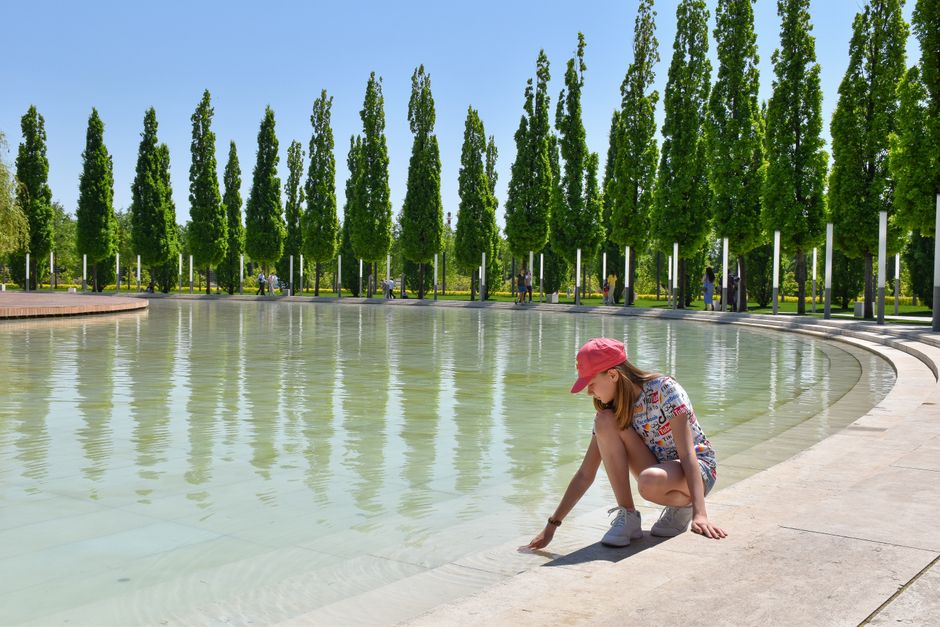
Spring weather in Paris changes quickly. A morning can begin under blue sky and finish with cold rain. I choose parks that offer three things at once: a place to run, something visually interesting, and an easy exit toward food or shelter. A beautiful lawn alone is not enough for a child who needs a toilet or a warm drink.
For toddlers, choose compact gardens
Young children do best in gardens with short paths, visible boundaries, and nearby seating. Look for a playground close to the entrance rather than a huge park that requires twenty minutes of walking before the first activity. Formal gardens work well because parents can see across open spaces, while children get a clear change of scene from paths to lawns to play areas. Keep the morning short and return to your accommodation for a nap if the weather turns cold.
For primary-age children, add a mission
Older children need a reason to keep walking. Give them a spring mission: find three different leaf shapes, sketch a statue, count bridges, or photograph the strangest tree. Paris parks become much easier when the child has a job. The city lists more than 560 play areas, and many gardens have seasonal opening times, so check the official garden page before leaving your hotel. The Paris parks and gardens information also explains where scooters and small wheeled toys are allowed.
Do not promise a picnic as the only lunch plan. Wind, wet grass, and a closed kiosk can ruin it. Carry a backup sandwich and identify one café before entering the park.
Verdict: Pick the park with the easiest toilet, café, and metro escape, not the park that looks most impressive on a postcard.
Take the carousel route that rewards short attention spans
Carousels are the best low-effort win in Paris. The ride lasts only a few minutes, but children get a clear reward and adults get a pause. My favourite route starts in the central gardens, moves toward a lunch stop, and ends before everyone is tired. Do not build a full day around chasing several rides. One excellent carousel is enough.
Start with the Tuileries or Luxembourg
The Tuileries carousel works well beside a central Paris walk because you can pair it with the Louvre area, a snack, and a short look at the Seine. The Jardin du Luxembourg offers a slower, more old-fashioned experience. Its Garnier carousel dates from 1879 and lets children try to catch rings while the ride turns. That small game gives the ride more purpose than a simple rotation. Check the operator’s opening time and price on the day because seasonal rides can change schedule and cost.
Choose the ride by the child, not the photograph
For dinosaur fans, the Jardin des Plantes carousel has giraffes, elephants, lions, and other animal figures. For a child who loves stories, the Jules Verne carousel at La Villette has rockets, submarines, and fantastic animals. The 1913 carousel near the Eiffel Tower is a better choice for a child who wants something historic and unusual; it turns by a human-powered crank. The City of Paris carousel guide lists locations, but it warns that opening times vary with weather.
Keep coins or a card ready, and ask about height rules before your child chooses a seat. Some rides use a fixed ticket price; others change by season or operator.
Verdict: The Garnier carousel in Luxembourg is my best all-round pick for younger children because the ring game adds a simple challenge and the garden gives parents room to recover.
Use a two-hour museum rule for easier visits
The mistake I see most often is treating a museum like a test of endurance. Children rarely become more interested after the second hour. They become hungry, warm, and loud. For family visits, I book one museum block of 60 to 120 minutes, choose three things to see, and leave while the mood is still good. A short visit with one strong memory beats a long visit that ends in a complaint near the exit.
Choose hands-on science for the clearest win
The Cité des Sciences et de l’Industrie is my first choice for children who need to touch, test, and move. The exhibitions ticket costs €15 for adults, €12 for visitors aged 6 to 25, and €4 for children aged 2 to 5. The Cité des Enfants ticket costs €15, while the combined Cité des Enfants plus exhibitions ticket costs €19. The two age areas are designed for ages 2–6 and 5–10, so check the session and age band before booking. This is a better buy than a grand art museum for a child who asks to press every button.
Use the Louvre as a short story, not a conquest
The Louvre can work, but only with a narrow plan. In 2026, the full individual ticket is €32 for visitors from outside the European Economic Area and €22 for EEA citizens or residents; visitors under 18 enter free. Choose a route around one theme, such as animals, monsters, or ancient Egypt, and reserve a timed entry. La Petite Galerie and the family programme offer more help than wandering randomly toward the Mona Lisa. The Louvre’s 2026 rate sheet confirms the ticket categories and free-entry rules.
Know when to choose a smaller museum
For a child who dislikes vast buildings, pick Musée en Herbe, Musée des Arts et Métiers, or the Muséum national d’Histoire naturelle instead. The best museum is the one whose scale matches your child’s patience. Leave coats in a locker, use the toilet before entering, and set a clear finish time. I tell children the three things we will find, then let them choose the fourth.
Verdict: Choose Cité des Sciences for active children, the Louvre for one carefully chosen story, and a smaller museum for a first cultural visit.
Paris has more than 560 children’s play areas in its gardens, so a family trip does not need to revolve around queues and famous paintings. After years of planning city days around tired legs, I have learned one rule: give children outdoor space before asking them to behave indoors. Spring makes that strategy work beautifully.…