
8 Amazing Things You Should Experience When Going To Cambridge

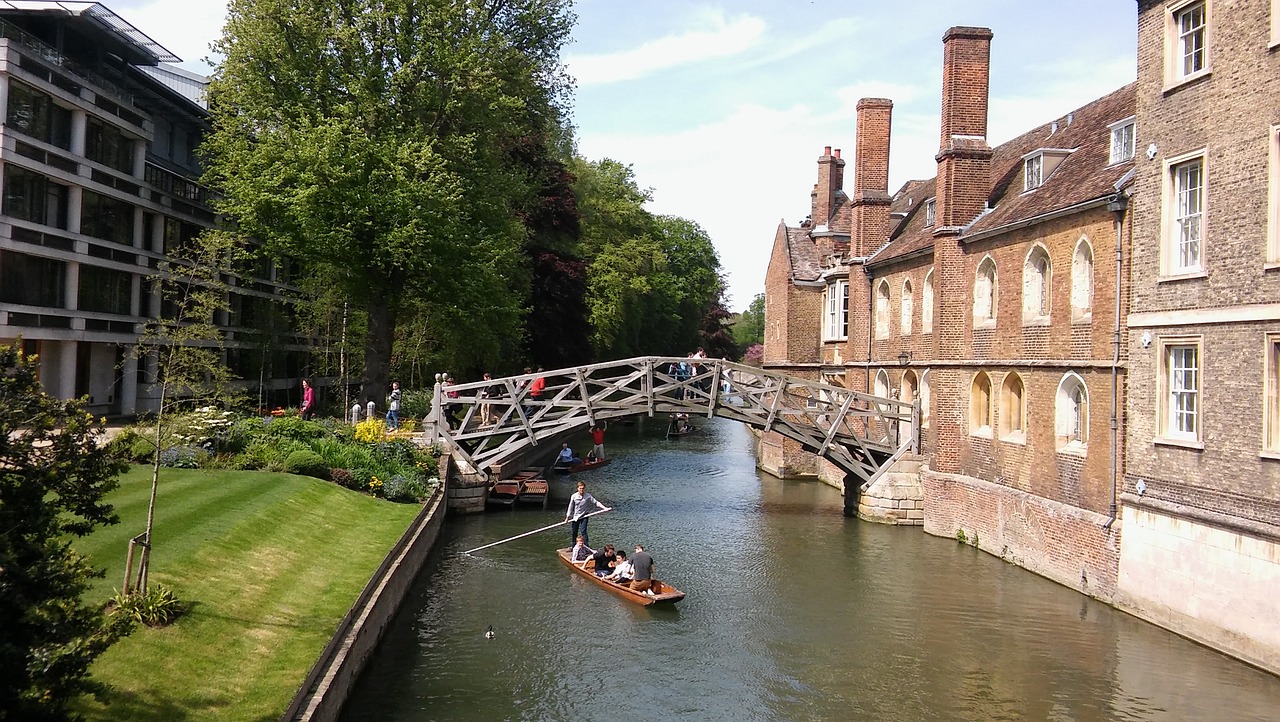
You arrive by train at Cambridge station — a 50-minute journey from London King’s Cross — and find yourself standing at the edge of a city that most people only half-see. Most first-time visitors spend four hours circling King’s College, take a photograph of the Mathematical Bridge, and head home feeling like they’ve done it. What they miss — the punts, the back gardens of the colleges, the pub where Watson and Crick announced the structure of DNA over a Tuesday lunchtime pint — is where Cambridge actually lives.
Cambridge rewards visitors who plan with deliberate specificity. These eight experiences represent what the city does better than anywhere else in England, drawn from what the place genuinely offers rather than what the tourist boards typically lead with.
Punting on the River Cam: What You Need to Know Before You Book
Punting is not a gimmick for tourists who don’t know better. The River Cam runs through the architectural heart of Cambridge, and the view from a flat-bottomed punt — looking up at the Backs, the stone bridges, and the willows that pull at the water’s surface — is one of the most distinctive urban perspectives in England. Most visitors who skip it cite the price or the crowds. Both are manageable with some advance planning.
Expect to pay between £30 and £45 for a chauffeured punt accommodating up to six people, or roughly £18 to £25 per hour for self-hire. The Cam is busiest on weekend afternoons from June through August. Early morning departures before 10am, or weekday slots in May and September, typically offer calmer water and a noticeably different atmosphere — fewer boats competing for the same stretch of river.
Chauffeured vs. Self-Hire: The Actual Difference
A chauffeured punt gives you a guide who steers and narrates while you sit back. Self-hire means you control the pole — and this is considerably harder than it appears. Most first-timers spend the opening 20 minutes fighting the current sideways. For a group of four or more who want a relaxed hour on the water, chauffeured is the better choice. Couples or solo travelers with patience for a physical learning curve often prefer the self-hire experience for its independence.
Scudamore’s vs. Let’s Go Punting: Which Operator to Book
Scudamore’s Punting Company is the largest operator in Cambridge, with launch points at Magdalene Bridge and Mill Lane. Their standard 45-minute chauffeured tour runs approximately £22 per person on a group booking. Boats are well-maintained; guides are consistently briefed on college history. Let’s Go Punting operates from the Quayside near Magdalene Bridge and charges around £85 for a private chauffeured boat of up to six — a slightly lower per-person rate for a full group. For solo travelers joining a shared departure, both operators price similarly. Book ahead for any weekend in summer; walk-up availability on weekday mornings in April or October is typically fine.
King’s College Chapel Earns a Proper Visit, Not a Glance From the Gate
The fan-vaulted ceiling inside King’s College Chapel is among the finest surviving examples of Perpendicular Gothic architecture anywhere in England, and the Rubens altarpiece alone justifies the approximately £12 adult admission. Visitors who spend less than 30 minutes inside are, in most cases, not doing it justice. The Christmas Eve Festival of Nine Lessons and Carols — broadcast on BBC Radio 4 continuously since 1928 — draws queues that form days in advance; outside December, weekday mornings are generally accessible without significant waiting.
Which Cambridge Colleges Are Worth the Entrance Fee
Cambridge has 31 colleges. Most are not open to tourists. Of those that are, several charge entry, and access to many is restricted or closed entirely during exam season — typically late April through mid-June. This is one of the more consistent mistakes first-time visitors make: arriving in May and finding gates shut across the center.
| College | Entry Fee (Adult) | Key Feature | Exam Season Access |
|---|---|---|---|
| King’s College | ~£12 | Gothic chapel, Rubens altarpiece | Limited — check ahead |
| Trinity College | ~£4–£5 | Wren Library, Newton’s apple tree | Closed during exams |
| St. John’s College | ~£5 | Bridge of Sighs, Second Court | Restricted during exams |
| Queens’ College | ~£5 (peak season) | Mathematical Bridge, riverside gardens | Closed during exams |
| Corpus Christi | Free (Old Court) | Oldest college court in Cambridge | Often accessible |
| Emmanuel College | Free | Wren Chapel, ornamental duck pond | Generally open |
Trinity College gives the best value of the paid options. The Wren Library holds original manuscripts including works by Newton, Milton, and Tennyson. The grounds include one of the more credible claimants to the original apple tree propagated from Newton’s orchard at Woolsthorpe — not the same tree, obviously, but a genuine graft from the original stock. If you’re visiting during exam season and access is restricted, Emmanuel College and Corpus Christi’s Old Court remain among the more reliably open alternatives.
The Eagle Pub on Free School Lane Is Worth One Deliberate Pint
Go here. Don’t treat it as optional background color for the trip.
The Eagle on Free School Lane is where Francis Crick walked in on February 28, 1953, and told the lunchtime crowd that he and James Watson had “discovered the secret of life.” The structure of DNA had been worked out that morning in a laboratory approximately 200 meters away. A plaque marks the spot at the bar. The pub itself dates to the 1600s and has been in continuous operation since.
The RAF bar upstairs carries signatures and squadron numbers burned and written into the ceiling by WWII airmen stationed near Cambridge who drank there regularly during the war. Most visitors to The Eagle never go upstairs. This is a mistake — the ceiling is one of the more unexpectedly affecting things in the city.
What to Order and When to Visit
Eagle’s DNA ale, brewed by City of Cambridge Brewery in tribute to the 1953 announcement, is the obvious choice and genuinely worth ordering. Greene King ales run alongside it on tap. Arrive before noon on a weekday for the quietest experience; weekend afternoons fill the main bar quickly. The kitchen serves standard pub food — the food is unremarkable, but that is not why you are there.
Other Historic Cambridge Pubs Worth Your Evening
The Anchor on Silver Street sits directly at the Mill Pond with water views — Pink Floyd reportedly used it regularly when founder Syd Barrett was studying in Cambridge. The Mill, immediately next door, has outdoor seating overlooking the punting lanes and gets afternoon light that makes it worth the slightly elevated prices. For a quieter evening without tourist crowds, The Free Press on Prospect Row is a small no-music local that has changed little since the 1980s and pours consistently good ales from a short, rotating selection.
Five Reasons the Fitzwilliam Museum Deserves an Hour You Weren’t Planning to Give It
- It’s free. The Fitzwilliam houses one of the finest art collections in England outside London — Egyptian antiquities, Impressionist paintings, Greek and Roman coins — and charges no admission. A significant number of visitors walk past without knowing it exists.
- The Impressionist rooms hold Monet, Renoir, and Degas in spaces that rarely feel crowded, even in peak summer.
- The Egyptian gallery contains genuine mummies with associated burial objects that are often more substantial than what many regional national museums display.
- The neoclassical building on Trumpington Street, completed in 1848, is worth a look from the exterior even on a day you don’t have time to go inside.
- The museum café is one of the quieter, more reasonably priced places in central Cambridge for a coffee — a meaningful advantage in a city where tourist-facing cafés near King’s Parade charge accordingly.
Plan for 60 to 90 minutes. The museum is closed on Mondays. It typically opens at 10am Tuesday through Sunday and closes at 5pm, though hours shift during university holidays — checking the Fitzwilliam’s official website before visiting is advisable.
Cycling Cambridge: Questions Visitors Actually Ask
Cambridge has more bicycles per capita than almost any city in England. The infrastructure was built for cycling, and several routes from the city center into the surrounding countryside rank among the most pleasant rides in the region. For a visitor with one full day, cycling is one of the most efficient ways to see both central Cambridge and the landscape surrounding it.
Is it safe to cycle in Cambridge as a visitor?
Generally yes. The city center has extensive dedicated cycle lanes, and most drivers are accustomed to sharing narrow roads with cyclists. Areas approaching the Backs involve some pedestrian-heavy streets where dismounting and walking is more practical than riding. Cycling through college grounds is not permitted.
Where can you rent a bike?
Rutland Cycling at Station Road rents hybrid bikes from approximately £14 for a half-day and £22 for a full day, helmet included. They’re a five-minute walk from Cambridge railway station, which makes them the most practical first stop for visitors arriving by train. Cambridge Station Cycles operates a rental desk directly at the station in a similar price range. Both require a deposit and identification.
Which route is worth cycling?
The Grantchester Meadows route — roughly 5km from central Cambridge along the river path to the village of Grantchester — is the clear choice for most visitors. The path runs along the Cam through flat open meadows and is almost entirely off-road. Grantchester has the Orchard Tea Garden, where Rupert Brooke wrote poetry and E.M. Forster was a regular. A pot of tea and a scone runs about £8 to £10; the garden has been operating since 1897. The ride itself takes approximately 25 minutes at a relaxed pace.
The Backs and Cambridge Market: Two Experiences That Consistently Go Undervalued
The Backs is the name for the green spaces and gardens running behind the western side of several colleges along the River Cam. This is where the view that appears on every Cambridge postcard originates. Most visitors see it only from the water during a punt. Walking the Backs on foot — particularly the path from King’s toward St. John’s — gives a different and more grounded perspective on why the colleges were built where they were.
How to Navigate the Backs Without a Guide
Access to the Backs is partly through college grounds (subject to their own opening hours) and partly via public footpaths that remain accessible year-round. The path along the western bank of the Cam between Silver Street Bridge and Garret Hostel Bridge is public. This stretch — roughly 600 meters — offers direct views of the King’s College Chapel rear facade, Clare College Bridge (the oldest surviving bridge in Cambridge, dating to 1640), and Trinity’s riverside lawn. Before 8:30am, even in peak summer, the path is nearly empty.
What to Do at Cambridge Market Square
Cambridge Market on Market Square runs Monday through Saturday. Wednesday and Thursday typically have the best selection of food vendors. The permanent stalls include a secondhand book dealer carrying genuine academic texts — not tourist editions — and several food operators that offer considerably better value than the café chains on King’s Parade. The curry stall near the center of the market has run in roughly the same form for years and serves a good plate for £6 to £8. It is not a formal restaurant, and that is precisely the point.
The travelers who leave Cambridge feeling like they understood it — rather than just photographed it — are the ones who spent time on the water, went upstairs at The Eagle, and gave the Fitzwilliam an hour they hadn’t originally planned for.
You arrive by train at Cambridge station — a 50-minute journey from London King’s Cross — and find yourself standing at the edge of a city that most people only half-see. Most first-time visitors spend four hours circling King’s College, take a photograph of the Mathematical Bridge, and head home feeling like they’ve done it.…