
PCT Backpacking for Beginners: Permits, Gear, and 2026 Planning

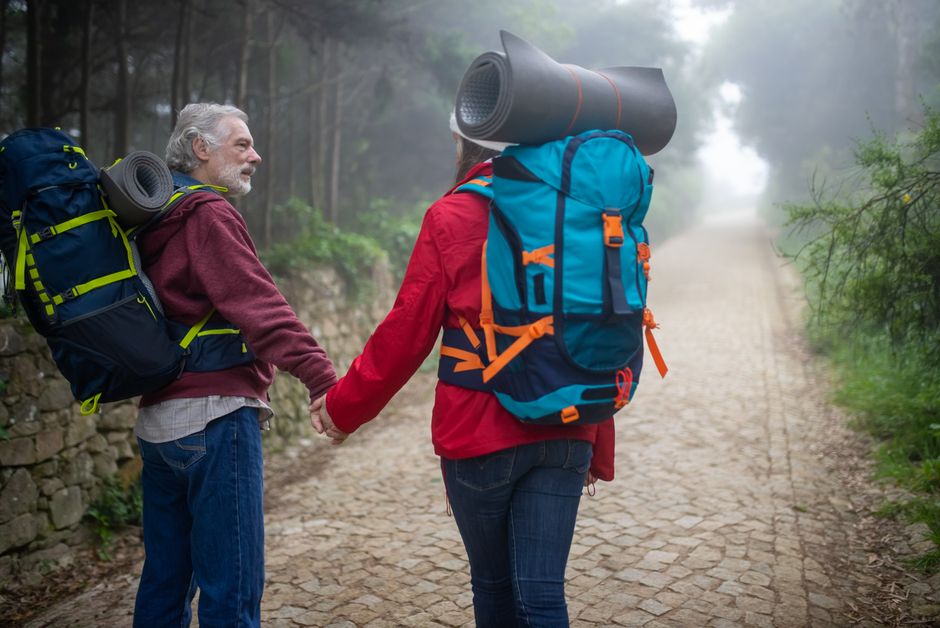
You’ve watched the YouTube documentaries. You’ve read the trail journals. And now you’re sitting at your desk in February, staring at a map of California, Oregon, and Washington, wondering if you can actually pull off a Pacific Crest Trail thru-hike. Maybe you’ve never slept in a tent for more than two consecutive nights. Maybe you’ve never carried more than a daypack. The honest answer: yes, you can do this. But the gap between wanting to hike the PCT and actually standing at the southern terminus in Campo, California is filled with permits, gear decisions, and physical preparation that most beginner guides gloss over.
This guide focuses on what actually matters for a 2026 start date. Not the romanticized version. The logistical version that gets you from Mexico to Canada without quitting in the first 200 miles.
The Permit System: What You Actually Need for 2026
The Pacific Crest Trail Association (PCTA) manages the long-distance permit system, and the rules changed significantly for the 2026 season. For 2026, expect the same framework. You need a permit if you’re hiking 500 or more continuous miles. That permit covers you for most of the trail, but it does not cover everything. The California Campfire Permit is separate and free. You’ll also need an Oregon Cascades permit if you’re hiking through the Central Cascades Wilderness areas, and a Canada entry permit if you plan to finish at the northern terminus and cross into Manning Park.
Permit Application Timeline
The PCTA opens permit applications in two rounds. Round one is typically in November of the prior year, and round two is in January. For a 2026 start, you’ll apply in November 2026 and January 2026. The permit costs nothing to apply for, but you must register for an account on the PCTA website before application day. Start dates run from March 1 to May 31 for northbound hikers. The most competitive dates are mid-April to early May. If you get a late March start, you’ll encounter significant snow in the San Jacinto Mountains and the Sierra Nevada. If you get a late May start, you’ll face extreme heat in the desert sections and a compressed window to finish before Washington snows arrive in October.
What the Permit Does Not Cover
- Campfire permits — free, required in California if you use a stove
- Oregon Central Cascades Wilderness permits — separate, competitive, required for specific sections
- Canada entry permit — required to cross into Manning Provincial Park at the northern terminus
- San Jacinto State Park camping — if you camp overnight in the state park section
Many first-timers assume the long-distance permit covers everything. It doesn’t. Budget time to secure these supplementary permits before you leave. The Oregon Central Cascades permit, in particular, has a limited number of daily entries and can derail a hike if you arrive without one.
What a 2026 PCT Thru-Hike Actually Costs
Forget the $1,000 figure you see on some forums. That’s a starvation budget. A realistic PCT thru-hike costs between $6,000 and $10,000 per person for the 4-6 months on trail. That includes gear, food, resupply shipping, town stays, replacement shoes, and unexpected expenses. Most hikers I’ve talked to who finished in 2026 and 2026 reported spending closer to $8,000 total. The biggest budget killer is not gear. It’s town days. Every zero day in a trail town means a hotel room, restaurant meals, and often alcohol. If you take 20 zero days at $100 per day, that’s $2,000 right there. Hikers who resupply quickly and get back on trail spend dramatically less.
| Expense Category | Low Estimate | Typical Estimate | Notes |
|---|---|---|---|
| Initial gear (if starting from scratch) | $1,500 | $2,500 | Ultralight setups cost more upfront |
| Food and resupply | $3,000 | $4,500 | $15-20 per day on trail, more in towns |
| Town stays and zero days | $800 | $2,000 | Hotel rooms, hostels, restaurants |
| Shoe replacement | $300 | $600 | 4-5 pairs at $120-150 each |
| Permits and fees | $50 | $100 | Most permits are free, Canada entry has a fee |
| Emergency fund | $500 | $1,000 | Injury, weather delays, unplanned expenses |
One thing that surprises beginners: shipping resupply boxes is not always cheaper than buying in town. Postage for a single box can run $20-30. If you’re shipping 20 boxes, that’s $400-600 in postage alone. Many hikers now resupply almost entirely from grocery stores and gas stations along the trail, especially in California and Oregon. Washington has fewer resupply options, so shipping boxes to Stehekin and White Pass makes more sense there.
Gear That Actually Works for a Thru-Hike
Your gear choices will make or break your hike more than any other factor. Not because you need the most expensive equipment, but because carrying too much weight destroys morale and causes injuries. The average beginner starts with a base weight (everything except food, water, and fuel) of 25-30 pounds. Experienced thru-hikers aim for 12-18 pounds. Every pound over 20 pounds of base weight increases your chance of knee problems, foot injuries, and quitting in the first month.
Here’s what I’d actually recommend for a 2026 PCT hike, based on gear that’s currently available and proven on the trail:
- Pack: Hyperlite Mountain Gear Junction 3400 ($379, 2.0 lbs) or the Gossamer Gear Mariposa 60 ($285, 2.0 lbs). Both carry 30-35 pounds comfortably and have survived thousands of PCT miles.
- Shelter: Zpacks Duplex ($699, 1.2 lbs) is the most common PCT shelter for a reason. The Durston X-Mid Pro 2 ($639, 1.3 lbs) is gaining ground and handles wind better. If you’re on a budget, the Six Moon Designs Lunar Solo ($250, 1.6 lbs) works fine.
- Sleeping bag/quilt: Enlightened Equipment Revelation 20°F quilt ($345, 1.4 lbs) or the Katabatic Gear Flex 22°F ($395, 1.5 lbs). A 20°F rating is the sweet spot for a typical March-to-September hike.
- Sleeping pad: Therm-a-Rest NeoAir XLite NXT ($210, 13 oz). The NXT version is quieter than the old model and just as warm.
- Shoes: You’ll go through 4-5 pairs. The Altra Lone Peak 8 ($150) and the Hoka Speedgoat 5 ($155) are the two most common trail shoes. Buy a half size larger than your normal shoe to account for foot swelling.
- Water filtration: Sawyer Squeeze ($41) beats the Sawyer Mini. The flow rate is better and it clogs less. Pair it with two 1-liter Smartwater bottles and a 2-liter CNOC Vecto bladder.
The mistake I see most often: beginners buy a 5-pound Osprey pack because it feels comfortable in the store, then load it with 35 pounds of gear and wonder why their shoulders hurt after a week. A lighter pack with less capacity forces you to make better gear decisions. That’s the point.
The Desert Section Will Break You If You Let It
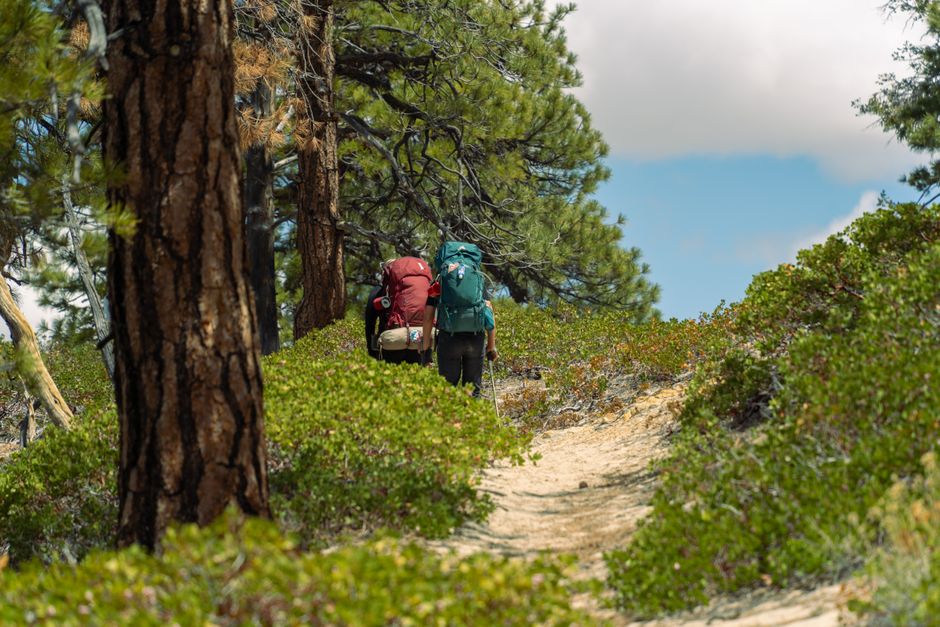
The first 700 miles from Campo to Kennedy Meadows South are the most dangerous and most underestimated section of the entire trail. Not because of technical difficulty. Because of water scarcity, heat, and the psychological shock of starting a 2,650-mile hike. The desert is not flat. You’ll climb over 100,000 feet of elevation gain in the first 700 miles. You’ll carry 4-6 liters of water at a time, adding 8-12 pounds to your pack. And you’ll do it while your body is still adjusting to hiking 20 miles a day.
Most people who quit the PCT quit in the first 300 miles. The reasons are consistent: they started too fast, carried too much weight, or didn’t have a realistic plan for water. If you’re starting in April or May, the daytime temperatures in the desert can hit 100°F. Hiking during the heat of the day is a recipe for heat exhaustion. Experienced hikers adopt a schedule that looks like this: wake at 4:30 AM, hike from 5 AM to 11 AM, siesta during the heat, hike again from 4 PM to 8 PM. This is not optional in May. It’s survival.
Water sources in the first 700 miles are unreliable. The PCT Water Report, maintained by volunteers, is your most important resource. Check it at every town stop. Some water caches exist, but you should never plan a hike around a cache that might be empty. Carry enough water to reach the next reliable source, not the next cache.
Resupply Strategy: Ship Boxes or Buy as You Go?
Most successful thru-hikers use a hybrid approach. In California, buying food in trail towns works well. The towns of Idyllwild, Big Bear, Wrightwood, and Tehachapi all have adequate grocery stores within walking distance or a short hitch from the trail. Shipping boxes to every single resupply point is expensive and inflexible. Your cravings change, your appetite changes, and what you thought you’d want to eat in month three is rarely what you actually want.
Washington is a different story. The resupply options at Stevens Pass, Snoqualmie Pass, and White Pass are limited and expensive. Shipping boxes to these locations makes sense. The town of Stehekin, at the north end of Lake Chelan, has a tiny store with limited options and a bakery that is worth every penny. Ship a box there.
Oregon is the easiest section for resupply. The trail crosses highways regularly, and the towns of Ashland, Crater Lake, Bend, and Cascade Locks all have full grocery stores. You can resupply every 3-4 days in Oregon without shipping a single box.
One piece of advice that sounds counterintuitive: don’t over-plan your resupply. Many beginners spend months preparing elaborate resupply spreadsheets, then abandon them within three weeks. The trail has a way of changing your plans. You’ll hike faster or slower than expected. You’ll skip towns you thought you’d visit and stop in towns you’d never heard of. Flexibility is more valuable than a detailed plan.
Physical Preparation That Actually Matters
You don’t need to be an athlete to hike the PCT. You need to be durable. The people who finish are not the fastest hikers. They’re the ones who can hike 20 miles a day, day after day, without breaking down. That requires three things: leg strength, foot toughness, and the ability to recover.
The best training is hiking with a loaded pack. Start with 15 pounds and work up to 30. Do it on terrain similar to what you’ll encounter. If you live somewhere flat, use a stair climber or find a hill and do repeats. The specific muscles you need are the ones that carry weight downhill, not uphill. Downhill hiking destroys knees and quads faster than anything else. Train for the downhills.
Foot care is the most underrated aspect of preparation. Most injuries that end thru-hikes are foot injuries: blisters, plantar fasciitis, stress fractures. Break in your shoes before you start. Learn how to tape hotspots before they become blisters. Leukotape is the standard. Carry it. Use it early, not after the blister forms. If you’ve never hiked more than 10 miles in a day, do a few 15-20 mile days before you start. Your feet need to adapt to the abuse.
Some hikers start the PCT having never backpacked overnight. They finish. But their first two weeks are miserable. A few shakedown trips — even just 2-3 nights — will teach you how to set up your tent in the dark, how to use your stove in the wind, and how to pack your bag efficiently. Those skills matter more than cardiovascular fitness.
When You Should NOT Hike the PCT in 2026
Here’s the section most guides skip. There are legitimate reasons to delay your thru-hike. If you have a history of knee injuries that haven’t been addressed with physical therapy, the PCT will find that weakness and exploit it. If you’re carrying significant debt and taking six months off work would create financial stress that follows you onto the trail, that stress will poison your hike. If you’re doing this because you’re running away from something — a breakup, a job you hate, a general dissatisfaction with life — the trail will not fix it. It will amplify it.
The PCT is not therapy. It’s a very long walk with beautiful views and occasional misery. The people who finish are not the ones with the best gear or the most training. They’re the ones who have a reason to be out there that survives contact with 100°F heat, 30-mile water carries, and three consecutive days of rain in Washington. If your reason is solid, the logistics will work themselves out. If your reason is shaky, no amount of planning will save your hike.
Also worth noting: a thru-hike is not the only way to experience the PCT. Section hiking is growing in popularity, and for good reason. You can hike the entire trail over several years, fitting sections into your life without quitting your job or draining your savings. The John Muir Trail, which overlaps with the PCT for 160 miles through the Sierra Nevada, is a world-class hike in its own right and requires a fraction of the time commitment. If a full thru-hike doesn’t fit your life in 2026, section hiking is not a consolation prize. It’s a legitimate alternative that many hikers prefer.
Quick Comparison: Thru-Hike vs. Section Hike in 2026
| Factor | Full Thru-Hike | Section Hiking |
|---|---|---|
| Time commitment | 4-6 months continuous | 2-6 weeks per section, spread over years |
| Cost | $6,000-$10,000 total | $1,000-$2,000 per section |
| Permit complexity | One long-distance permit plus supplements | Individual permits per section |
| Physical demand | Extreme, sustained for months | High, but recoverable between sections |
| Job impact | Requires quitting or extended leave | Fits around vacation time |
| Community experience | Deep trail community, lifelong friendships | More solitary, less consistent social group |
The thru-hike is a singular experience. There’s nothing like walking from Mexico to Canada in one continuous push. But it’s not the right choice for everyone, and pretending otherwise does a disservice to people who would genuinely enjoy section hiking more. Make the choice that fits your life, not the choice that looks best on Instagram.
You’ve watched the YouTube documentaries. You’ve read the trail journals. And now you’re sitting at your desk in February, staring at a map of California, Oregon, and Washington, wondering if you can actually pull off a Pacific Crest Trail thru-hike. Maybe you’ve never slept in a tent for more than two consecutive nights. Maybe you’ve…